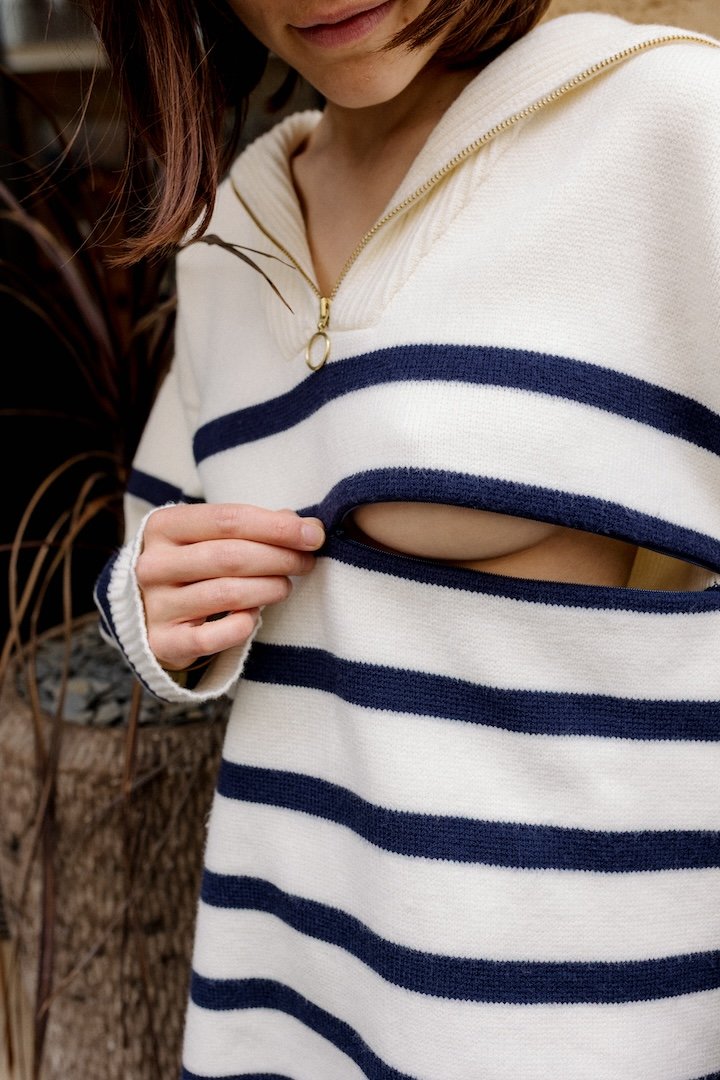
Nursing bralette or nursing bra: the choice is yours (and depends a little on your bust)
Key takeaways
-
Both open with one hand for feeding. The difference lies in the construction: total flexibility with a bralette, structure with a bra.
-
The bralette almost always wins in the first few weeks. With sensitive breasts, fluctuating sizes, and nighttime feeds, flexibility makes all the difference.
-
The structured bra has the edge for larger busts and very dressy outfits.
-
Many moms end up with both: a bralette for nighttime and cozy days, and a structured style for days when their outfit calls for it.
-
In both cases, there are no rigid underwires, just stretchy fabric and a clip you can operate with your eyes closed.
Nursing bralette or nursing bra? The question comes up as soon as you start packing your hospital bag.
The short answer fits in one sentence. The first few weeks call for the flexibility of a bralette; after that, it depends on your breasts and your outfits.
The full answer deserves a proper comparison. Here it is, based on our experience with our collection of nursing bras and bralettes, and without hiding our preference. We'll share it at the end.
What both do equally well
Let's start with what they have in common, because it's essential.
Both nursing bralettes and nursing bras open at the cup with one hand, most often using a clip on the strap. That's what they're made for: feeding starts without getting undressed.
Both are designed without rigid underwires, the general recommendation during lactation. Both are made from stretchy fabrics that adapt to a breast whose size changes several times a day.
So the match doesn't come down to function. It comes down to how it feels.
What a nursing bra does better
The nursing bralette is like a second skin. No molded cups, no structure, just soft fabric that hugs your breasts as they are in that moment.
Its strengths are exactly what you need in the first few months.
All-day comfort comes first. You can wear it day and night without thinking about it, which is handy since feeds happen day and night too.
Adaptability comes next. Between your milk coming in, full breasts in the morning, and softer breasts in the evening, your breasts do their own thing. The bralette adapts without ever squeezing.
Simplicity, at last. An organic cotton bralette like our Mumderwear slips on, clips, washes, and starts all over again. And for anyone who refuses regulation maternity beige, the Graou leopard print version is a reminder that nursing underwear can have character.
What the structured bra does better
The molded-cup nursing bra still has real advantages.
Extra support comes first. For fuller busts, a structured design with wide bands and shaped cups distributes weight better on long days spent standing.
How it looks under fitted outfits. Under a close-fitting shirt or a formal dress, a molded cup creates a more defined silhouette.
If these two needs dominate your daily life, opt for a structured underwire-free style. Otherwise, the flexibility is more than enough, and it’s more comfortable to wear.
The verdict, situation by situation
|
Your situation |
Our recommendation |
|---|---|
|
Maternity and the first few weeks |
Bralette, no question |
|
Nights and night feeds |
Bralette |
|
Breast size fluctuates a lot |
Bralette |
|
Full bust, long days |
Structured underwire-free bra, or high-support bralette |
|
Fitted outfit or dressy occasion |
Structured bra |
|
Back to work |
Both work; the key factor is the one-handed clip. |
The real answer, as many Mamas discover over time, is often both. A nursing bralette as your everyday staple, and a more structured style for the days you need it.
And if your budget means you have to choose, start with the nursing bralette. It’s what you’ll wear during the first few months, when comfort matters most.
Before you buy: the question of size
Whether you choose a nursing bralette or bra, getting the size wrong ruins everything. Too tight, and you’ll be uncomfortable all the time. Too big, and you’ll lose support.
The good news is that choosing the right size is simple once you know how. We explain it in detail, including measurements and edge cases, in our article How to choose the right nursing bra size. And for an overview of this garment, our complete nursing bra guide is a great place to start.
Your most frequently asked questions
Q: Does a nursing bra provide enough support?
R : For most busts, yes, absolutely. A well-fitting nursing bra made from stretchy fabric provides support without compression. Those with a fuller bust may prefer a structured style for long days.
Q: Can you sleep in a nursing bra?
R : Yes, it’s actually what it does best. Soft and wire-free, it’s comfortable to wear at night and keeps nursing pads in place.
Q: Do you need to buy both?
R : Not necessarily right from the start. Begin with two or three nursing bras for the first few months, then add a structured style if your outfits or comfort call for it.
You’ve probably guessed the preference we promised to share in the introduction. We built our Mumderwear line around the nursing bra because it’s the garment that best suits the realities of the first few months.
But the only right answer is the one that keeps you comfortable. A well-supported bust means calmer nursing sessions, and that's all that matters.